MyLocalGuide
A travel app for genuinely local experiences, and for meeting the local who hosts them.
- Role
- Product designer, solo, from research to UI kit
- Product
- My own app idea, in development
- Timeline
- Jun – Jul 2026
- Platform
- iOS app first · MVP planned with 2–3 developers in 2 months
- Stack
- Figma · Claude Code · Next.js · React · TypeScript · Tailwind · shadcn/ui
- Status
- MVP scope locked · usability test next
58% of 26 travellers said their biggest frustration is not knowing if an experience is really local.
The problem
Every time I travel, TripAdvisor and Google Maps show me the same places: the restaurant with 5,000 reviews, the shop everyone finds the same way. The neighbourhood spots only a local would recommend stay invisible, buried under sponsored content.
- Travellers don't have hours to dig through forums for genuine recommendations.
- Small local businesses can't outspend big platforms to be seen.
- Booking an experience abroad is hard when it isn't in your language.
What the survey showed: before locking the MVP, I asked 26 travellers how they find experiences today. 73% use Instagram and TikTok rather than booking platforms. Only 1 of the 26 rated the authenticity of current platforms 5 out of 5. And 77% search and book on their phone, which is why the app is mobile-first.
Key decisions
Try it before you pay
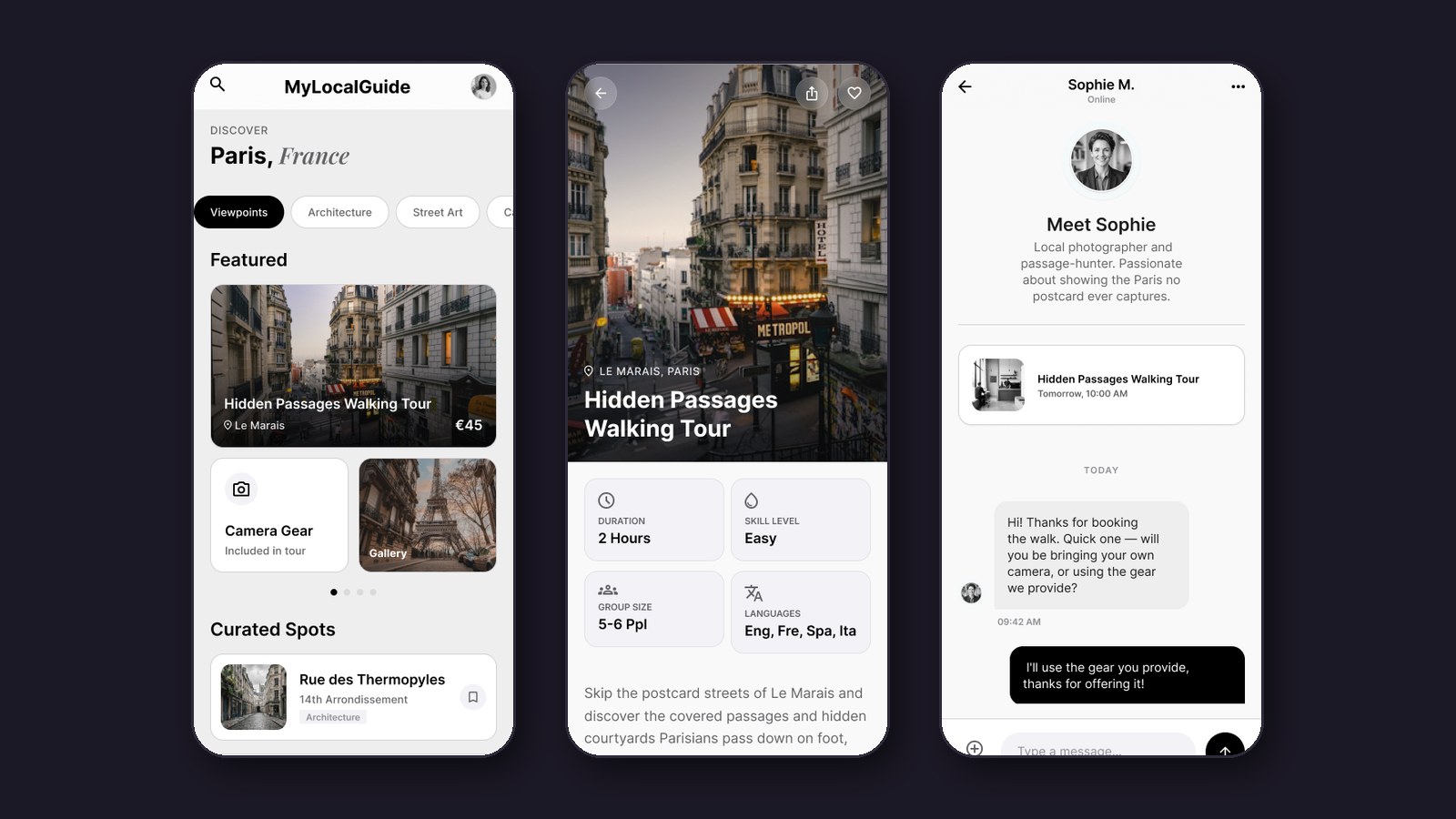
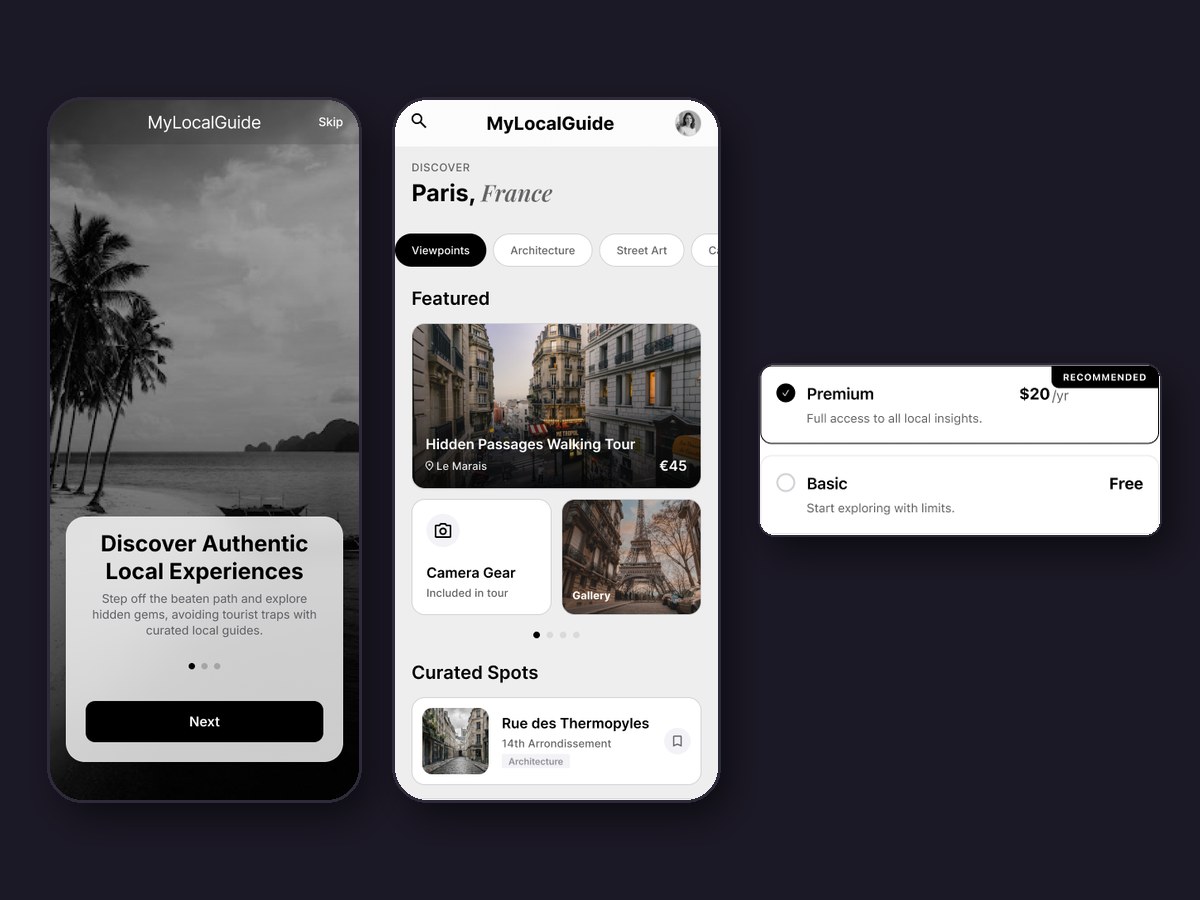
At onboarding, people choose between 5 free searches and an annual subscription. Search is by city with a few simple filters, so you get from "I just landed" to "here's something local" as fast as possible.
Why: the value is finding one genuinely local place. People should feel it before they're asked to pay.
Everything you need to decide, on one screen
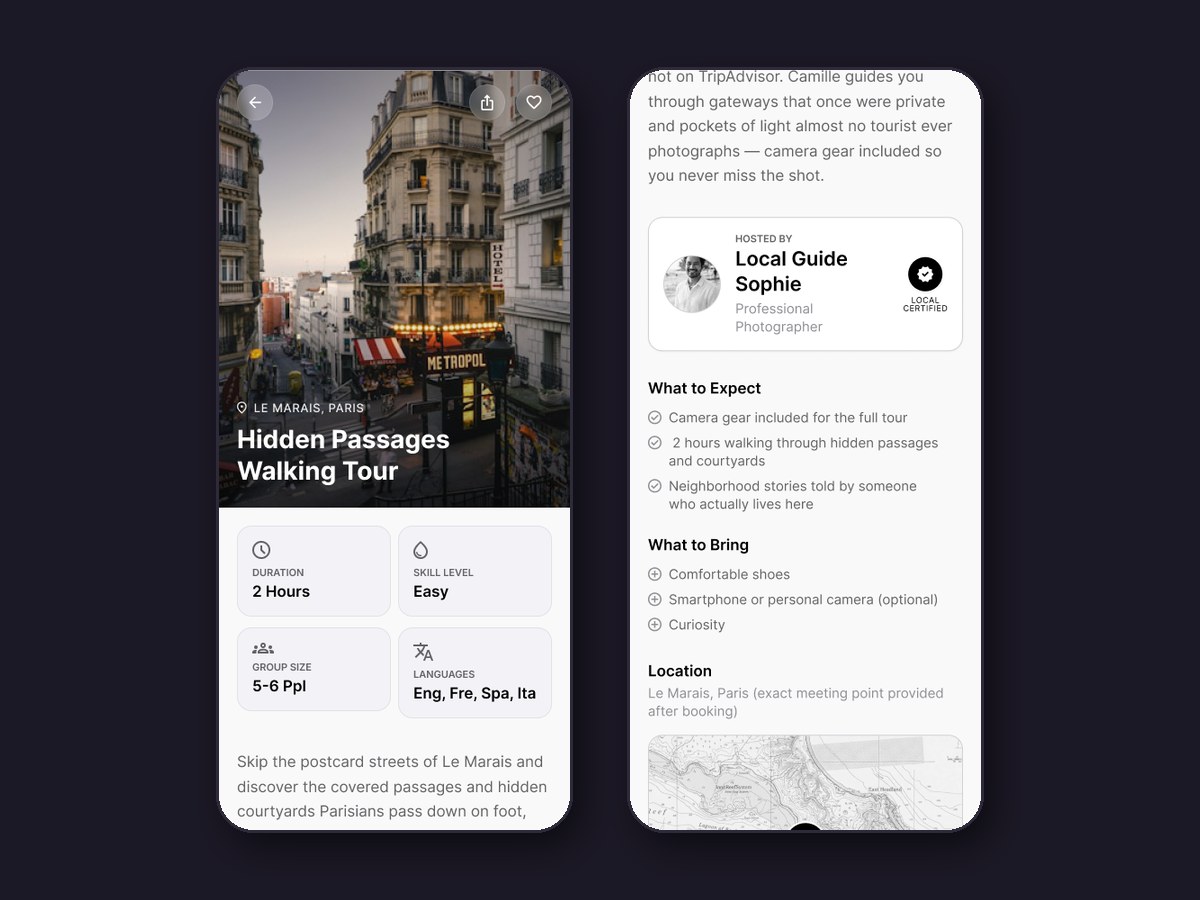
The experience page brings together duration, what to bring, what's included, a map and the price. Booking supports several payment methods, because travellers don't always have the same ones as locals.
Why: when the host speaks another language, every unclear detail becomes a back-and-forth. And 27% of the people I surveyed named hidden fees or unclear pricing as their biggest frustration.
Booking ends in a conversation
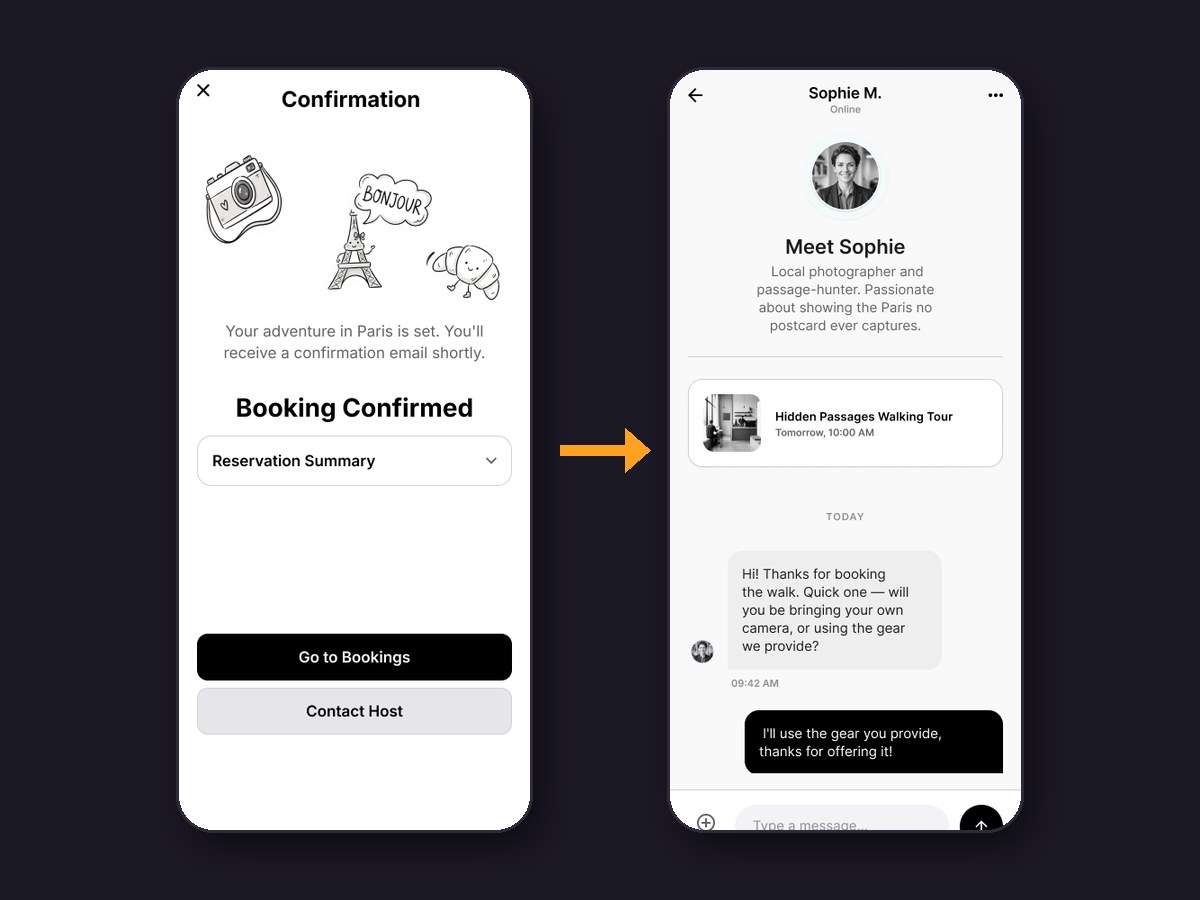
Once a booking is confirmed, the app takes you straight into a chat with the local host. I also drew a line on automation: nothing heavy that stands in for the human contact between traveller and host.
Why: the product is the connection with a real local person, not another list of places.
A design system built from the flow
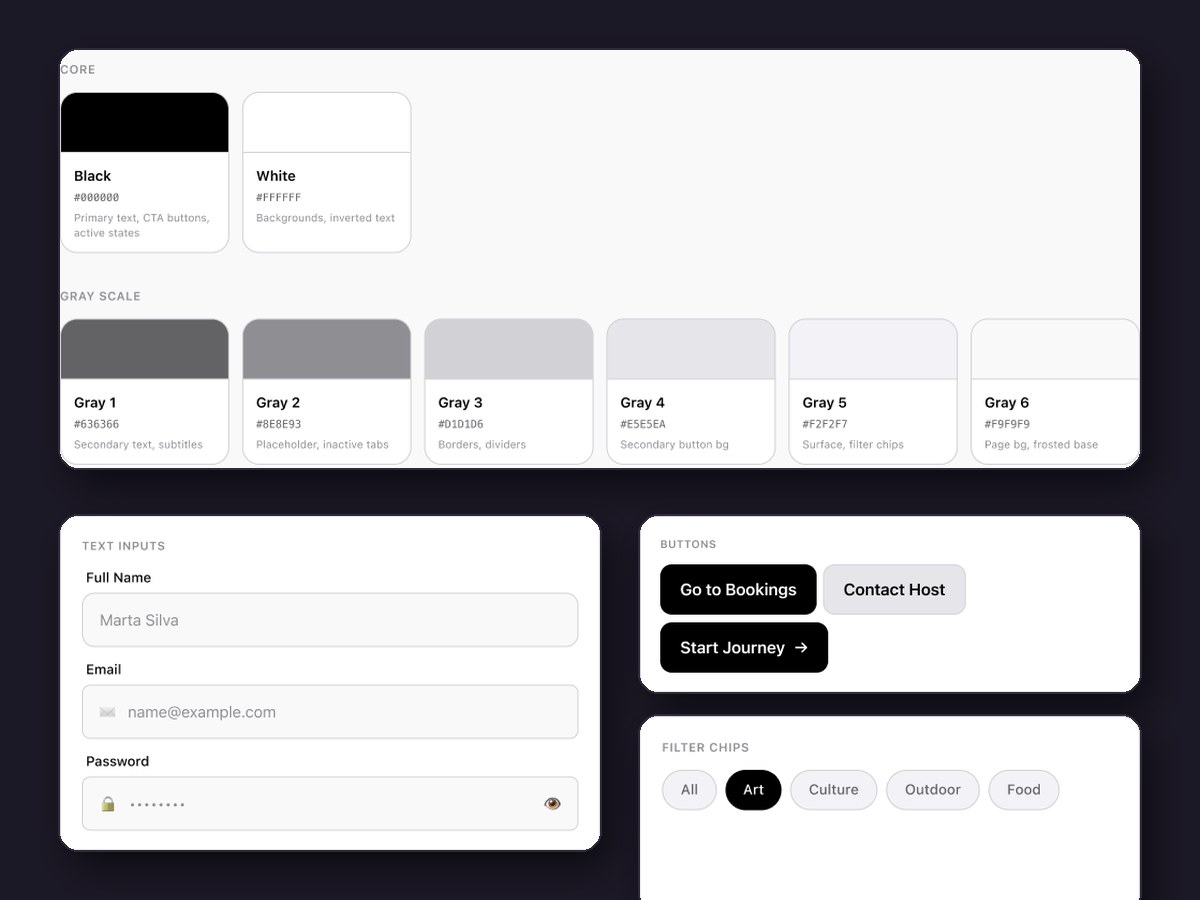
I built the UI kit with Claude Code, starting from the real screens instead of components in isolation. The first palette was too short for a flow with this many states, so I extended it to a full 100–900 scale and added status and gradient colours. Every input got default, focus, error and filled states, and I added an icon set afterwards.
Why: components should serve the screens they're for, not a generic library.
Results
Usability test still to run
What I'd do next
- Run the moderated usability test I've already written, with at least 5 people: "You leave for Paris next week and want something that isn't the usual tourist thing."
- Work out how to verify that a host is genuinely local, not just claiming to be. It's the biggest risk to the whole idea.
- Add the two things travellers asked for most: reviews that rate how authentic an experience felt (54%) and unedited photos from past guests (50%).
- Then the should-haves: saved experiences, past bookings, comparing similar experiences.